PT-141 occupies a distinct niche in peptide research: rather than targeting metabolic or growth hormone pathways, it engages the central nervous system through the melanocortin receptor system. Here's what that means, and how it's studied.
What Is PT-141?
PT-141, also known as bremelanotide, is a cyclic seven-amino-acid synthetic peptide structurally derived from alpha-melanocyte-stimulating hormone (alpha-MSH). It was originally identified as a metabolite of Melanotan II during tanning-related peptide research, and its activity as a melanocortin receptor agonist — particularly at the MC3R and MC4R subtypes — became the focus of subsequent investigation.
How It Differs From Peripheral-Acting Compounds
PT-141's mechanism is a useful contrast point in receptor pharmacology research: PDE5 inhibitors such as sildenafil act peripherally, on vascular tissue, to affect blood flow. PT-141 instead acts centrally, binding melanocortin receptors in the central nervous system. This distinction — peripheral vascular action versus central receptor signaling — is a key reason PT-141 draws separate research interest from PDE5-class compounds.
How the Melanocortin Receptor Pathway Works
In research models, activation of MC3R and MC4R in the hypothalamus has been studied in connection with several centrally regulated functions, including energy balance and sexual response pathways. Early animal studies examining PT-141 administration reported changes in sexual behavior markers in rodent models, which is what first drew research attention to this specific receptor pathway as distinct from peripheral vascular mechanisms.
What the Research Shows
The published literature on PT-141 / bremelanotide spans:
- Melanocortin receptor binding — studies characterizing its agonist activity at MC3R and MC4R subtypes
- Animal behavioral models — early research examining sexual behavior markers following administration in rodent models
- Clinical trial data — later-stage human trials, conducted for its pharmaceutical formulation, examining central nervous system-mediated effects on sexual dysfunction
- Structure-function research — study of its cyclic peptide structure relative to other melanocortin-system ligands
Research-Grade vs. Pharmaceutical Bremelanotide
As with the other compounds in this catalog, the distinction between categories matters. Bremelanotide has an FDA-approved pharmaceutical formulation (marketed as Vyleesi) for a specific clinical indication, manufactured to strict pharmaceutical standards and backed by clinical trial data. LTF-PT-10 is a different category of product entirely — a research-grade compound intended strictly for laboratory and in-vitro study.
| Category | Research-Grade PT-141 | Pharmaceutical Bremelanotide |
|---|---|---|
| Legal Status | Not for human use | FDA-approved, prescription only |
| Intended Purpose | Laboratory and in-vitro research | Clinical patient treatment |
| Manufacturing | Research lab standards | Pharmaceutical GMP facilities |
| Human Safety Data | Not established | Established via clinical trials |
Findings from the clinical trial literature describe outcomes for an approved drug product under clinical supervision — they don't transfer to unregulated research compounds, and researchers should consult primary sources directly for methodology and results.
Featured Research Compound
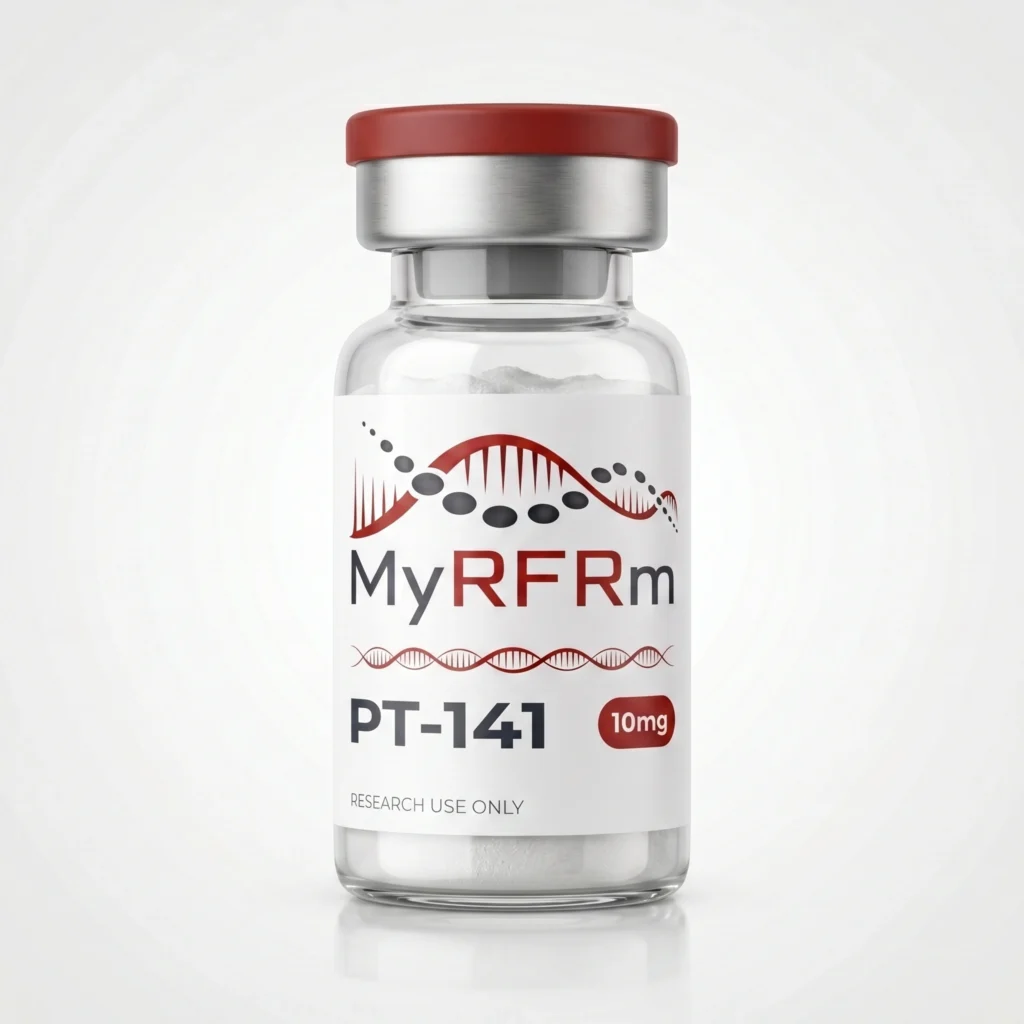
PT-141 — 10mg Research Vial
$69.00
Lyophilized powder · For laboratory research use only
View Product DetailsWho Uses PT-141 in Research Settings
PT-141 shows up across CNS pharmacology, receptor biology, and behavioral neuroscience research — anywhere a lab needs a well-characterized tool to study melanocortin receptor activity distinct from peripheral, vascular-acting compounds.
Frequently Asked Questions
What is PT-141?
A cyclic synthetic peptide, also known as bremelanotide, that acts as a melanocortin receptor agonist related to alpha-MSH.
How is PT-141 different from PDE5 inhibitors like sildenafil?
PDE5 inhibitors act peripherally on blood vessels. PT-141 acts centrally on melanocortin receptors (MC3R, MC4R) in the central nervous system — a distinct pathway.
Is LTF-PT-10 the same as the FDA-approved bremelanotide drug (Vyleesi)?
No. Vyleesi is an FDA-approved pharmaceutical product. LTF-PT-10 is a research-grade compound sold strictly for laboratory use.
What does LTF-PT-10 mean?
MyReformed Peptides' internal product code for the 10mg PT-141 research vial.