Sermorelin is one of the most studied growth-hormone-releasing hormone (GHRH) analogs in peptide research, prized for its short, well-characterized structure and its role as a foundational tool for exploring the GH/IGF-1 axis.
What Is Sermorelin?
Sermorelin is a 29-amino-acid peptide that corresponds to the biologically active fragment of human GHRH — the hypothalamic signal that tells the pituitary gland when to release growth hormone. Because it mirrors the natural GHRH sequence so closely, it has long served as a reference compound for researchers studying the upstream regulation of the GH/IGF-1 axis, rather than growth hormone itself.
How It Differs From Growth Hormone
It's a common point of confusion, so it's worth stating plainly: Sermorelin is not growth hormone. Recombinant HGH supplies growth hormone directly. Sermorelin instead acts one step upstream, stimulating the pituitary's own GHRH receptors — which is precisely why it's a useful model compound for studying the body's endogenous feedback loops rather than bypassing them.
How the GHRH Pathway Works
In physiological research, GHRH release from the hypothalamus follows a pulsatile pattern, prompting the anterior pituitary to secrete growth hormone in corresponding bursts — most prominently during slow-wave sleep. Because this pathway remains partially intact even as natural GHRH output declines, GHRH analogs like Sermorelin have become a common tool in research modeling of the aging GH axis.
What the Research Shows
Published research on Sermorelin has explored several angles of the GH/IGF-1 axis:
- Pituitary responsiveness — studies have used Sermorelin to test whether the pituitary can still be stimulated to release GH, a marker used in evaluating GH axis function.
- Sleep architecture — because GH release is tied to slow-wave sleep, GHRH analogs have been used in sleep-lab research to study that relationship.
- Body composition markers — some clinical literature from the compound's earlier pharmaceutical era examined GH/IGF-1 axis stimulation and lean mass, body fat, and related metabolic markers.
- Diagnostic use — Sermorelin stimulation tests have historically been used in endocrinology research to help characterize GH deficiency.
As with any research compound, findings vary by study design, dose, and population, and none of the above should be read as a claim about outcomes in any individual. Researchers should consult the primary literature directly for methodology and results.
Featured Research Compound
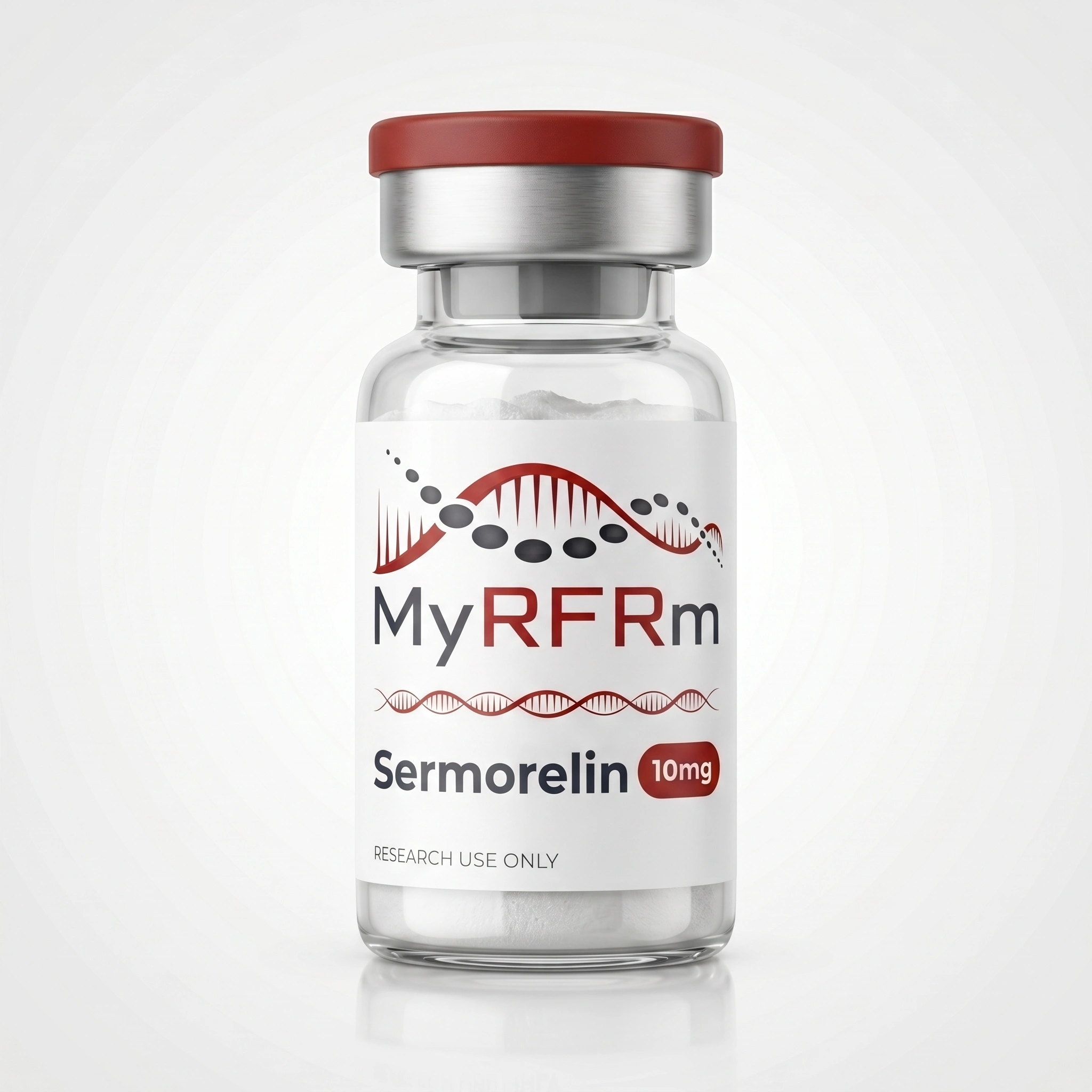
Sermorelin — 10mg Research Vial
$59.99
Third-party purity tested · For laboratory research use only
View Product DetailsWho Uses Sermorelin in Research Settings
Sermorelin shows up most often in academic and private-lab research focused on endocrinology, the physiology of aging, and sleep science — anywhere a researcher needs a well-characterized way to probe the GHRH receptor without introducing exogenous growth hormone into the model.
Frequently Asked Questions
What is Sermorelin?
A synthetic analog of GHRH, the signal that prompts the pituitary gland to release growth hormone. It's used in research as a tool for studying the GH/IGF-1 axis.
Is Sermorelin the same as HGH?
No. Sermorelin doesn't contain growth hormone — it targets the receptor that signals the pituitary to produce its own.
What does LTF-SR-10 mean?
It's MyReformed Peptides' internal product code for the 10mg Sermorelin research vial.
Is Sermorelin approved for human use?
No. This and every product on MyReformed Peptides is sold strictly for laboratory research — not for human consumption or clinical use.