GHK-Cu is one of the longest-studied peptides in the research literature, first identified in human plasma decades ago and still a subject of active investigation into copper-dependent cellular signaling and tissue regeneration pathways.
What Is GHK-Cu?
GHK-Cu is a naturally occurring tripeptide — glycyl-L-histidyl-L-lysine — complexed with a divalent copper ion (Cu²⁺). It was originally isolated from human plasma, and its strong, specific affinity for copper is central to its biological activity: GHK-Cu is thought to help regulate copper delivery to enzymes and pathways that depend on it, which is why it has drawn sustained research interest in extracellular matrix biology.
Why the Copper-Binding Structure Matters
Copper is a required cofactor for several enzymes involved in connective tissue remodeling, including those responsible for cross-linking collagen and elastin. Because GHK-Cu can bind and help traffic copper to these pathways, researchers use it as a tool to study copper-dependent signaling in cellular and tissue models, distinct from simply supplying free copper ion.
What the Published Research Covers
The research literature on GHK-Cu spans several angles of cellular and tissue biology:
- Extracellular matrix regulation — studies have examined its influence on collagen, elastin, and glycosaminoglycan gene expression in dermal fibroblast models
- Wound healing pathways — research has explored its role in tissue remodeling and repair signaling
- Antioxidant and anti-inflammatory signaling — some studies have investigated its effects on oxidative stress markers in cellular models
- Gene expression profiling — broader research has looked at GHK-Cu's influence on gene expression patterns associated with tissue remodeling and cellular health
GHK-Cu also appears as an ingredient in some commercial skincare formulations, which is a different product category and regulatory pathway entirely from the research-grade compound sold here. Findings from the broader research literature describe laboratory and cell-model observations — they don't constitute a therapeutic claim, and researchers should consult primary sources directly for methodology and results.
Featured Research Compound
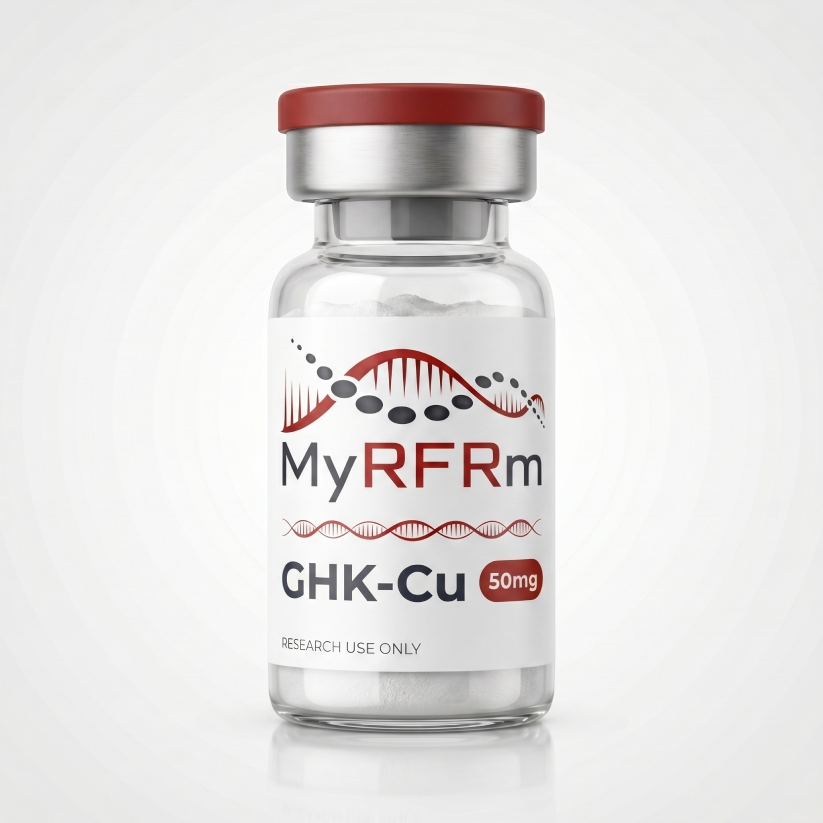
GHK-Cu — 50mg Research Vial
$65.00
Lyophilized powder · For laboratory research use only
Who Uses GHK-Cu in Research Settings
GHK-Cu shows up across dermatology, wound-healing, and copper biology research — anywhere a lab needs a well-characterized tool to study copper-dependent signaling, extracellular matrix regulation, or gene expression pathways tied to tissue remodeling.
Frequently Asked Questions
What is GHK-Cu?
A naturally occurring copper-binding tripeptide studied for its role in extracellular matrix regulation, collagen signaling, and cellular communication.
What is GHK-Cu studied for in research settings?
Collagen and elastin gene expression, wound healing pathways, antioxidant and anti-inflammatory signaling, and copper-dependent enzyme regulation.
Is GHK-Cu approved for human use?
It appears in some cosmetic formulations, but the compound sold here (LTF-GH-50) is a research-grade material intended strictly for laboratory use.
What does LTF-GH-50 mean?
MyReformed Peptides' internal product code for the 50mg GHK-Cu research vial.