
Retatrutide has become the breakout keyword in metabolic peptide research this year — often described as the "triple-G" agent for its unique ability to engage three distinct hormone receptors at once. Here's what that mechanism actually means, and what's known so far.
What Is Retatrutide?
Retatrutide is a synthetic peptide engineered as a triple receptor agonist, engaging GLP-1 (glucagon-like peptide-1), GIP (glucose-dependent insulinotropic polypeptide), and glucagon receptors simultaneously. This distinguishes it from earlier incretin-based compounds that act on only one or two of these pathways, which is why it has drawn significant research interest in metabolic and endocrine science.
How It Compares to Other GLP-Class Peptides
The receptor count is the key differentiator across this compound class:
| Compound | Receptors Engaged | Class |
|---|---|---|
| Semaglutide | GLP-1 | Single agonist |
| Tirzepatide | GLP-1, GIP | Dual agonist |
| Retatrutide | GLP-1, GIP, Glucagon | Triple agonist |
How the Triple-Receptor Mechanism Works
In research models, each of retatrutide's three target receptors contributes a distinct signaling role: GLP-1 receptor activation is associated with appetite suppression and glucose-dependent insulin release; GIP receptor activation is studied for its role in insulin sensitivity and lipid handling; and glucagon receptor engagement is associated with increased energy expenditure and fat breakdown. The rationale behind combining all three in one molecule is to study whether a broader metabolic signal produces effects beyond what single- or dual-receptor compounds achieve.
What the Research Shows
Retatrutide's pharmaceutical development program has published clinical trial data examining:
- Glycemic control — HbA1c reduction has been studied in Phase 3 trials for type 2 diabetes
- Body weight — weight change has been a primary endpoint across the trial program
- Comparative receptor pharmacology — research has compared its triple-agonist profile against single- and dual-agonist compounds
- Cardiometabolic markers — ongoing trials are evaluating broader metabolic and cardiovascular signals alongside glycemic outcomes
As of this writing, retatrutide remains under clinical investigation and has not received FDA approval for any indication. Trial results describe outcomes for an investigational pharmaceutical compound under clinical supervision — they don't transfer to unregulated research-grade material, and researchers should consult primary trial publications directly for methodology and results.
Featured Research Compound
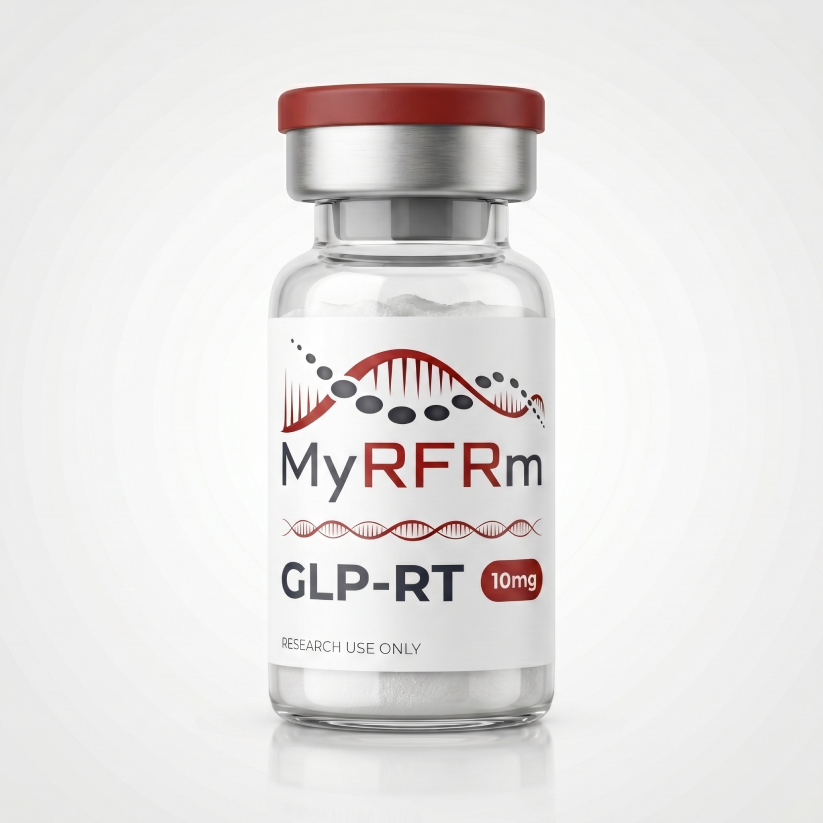
Retatrutide — 10mg Research Vial
$99.00
Lyophilized powder · For laboratory research use only
Who Uses GLP-RT in Research Settings
Retatrutide-class compounds are a focus of endocrinology, metabolic disease, and pharmacology research — labs working on receptor pharmacology, energy balance signaling, and comparative incretin research use compounds like GLP-RT to study multi-receptor activation in a single tool.
Frequently Asked Questions
What is retatrutide?
A synthetic peptide designed as a triple receptor agonist, engaging GLP-1, GIP, and glucagon receptors at once.
How is retatrutide different from semaglutide or tirzepatide?
Semaglutide targets one receptor (GLP-1), tirzepatide targets two (GLP-1, GIP), and retatrutide targets three (GLP-1, GIP, glucagon) — sometimes called a "triple-G" agent.
Is GLP-RT the same as an FDA-approved retatrutide drug?
No. Retatrutide has not received FDA approval and remains in clinical trials. GLP-RT (LTF-RT-10) is a research-grade compound sold strictly for laboratory use.
What does LTF-RT-10 mean?
MyReformed Peptides' internal product code for the 10mg retatrutide research vial.