CJC-1295 and Ipamorelin are among the most-studied growth hormone secretagogues in the research literature — not because they do the same thing, but because they don't. Each acts on a different pituitary receptor, which is exactly why researchers study them as a pair.
What Is CJC-1295?
CJC-1295 (No DAC) is a synthetic analog of growth-hormone-releasing hormone (GHRH), built from the first 29-30 amino acids of native GHRH with modifications intended to improve stability. It's studied for its ability to bind GHRH receptors in the anterior pituitary, the same receptor targeted by Sermorelin — though the two compounds differ in structure and pharmacokinetic profile. Our Sermorelin research guide covers that GHRH-receptor mechanism in more depth.
What Is Ipamorelin?
Ipamorelin is a synthetic pentapeptide that works through an entirely separate pathway. Rather than binding the GHRH receptor, it mimics ghrelin — the body's hunger-signaling hormone — and acts on the ghrelin receptor (GHS-R) in the pituitary. Ipamorelin is frequently studied for its receptor selectivity: research has examined whether it stimulates GH release without meaningfully affecting other pituitary hormones such as cortisol or prolactin, a distinguishing feature relative to older, less selective secretagogues.
Why the Two Are Studied Together
Because CJC-1295 and Ipamorelin act on distinct receptors — GHRH receptor and ghrelin receptor (GHS-R), respectively — researchers use the combination as a model for studying dual-pathway stimulation of the same downstream target, GH secretion from the pituitary.
CJC-1295 Pathway
GHRH receptor agonist — mimics the natural hypothalamic signal that prompts pituitary GH release.
Ipamorelin Pathway
Ghrelin receptor (GHS-R) agonist — a structurally unrelated pathway studied for its receptor selectivity.
Research interest in the combination centers on whether engaging both receptor systems together produces a more robust or sustained GH pulse than either compound alone — a question studied in pituitary and hypothalamic cell models rather than through simple additive assumptions.
What the Research Covers
Published research on this compound class has examined:
- Pituitary GH pulse dynamics — how GHRH-receptor and ghrelin-receptor activation compare and interact
- Receptor selectivity — whether Ipamorelin's action is limited to GH release without broadly affecting other pituitary hormones
- Pharmacokinetic comparison — half-life and structural differences between GHRH analogs like CJC-1295 and Sermorelin
- Combined receptor models — dual-pathway activation as a tool for studying pituitary and hypothalamic signaling
As with the other compounds in this catalog, findings from the broader literature describe laboratory and cell-model research — they are not a claim about outcomes in any individual, and researchers should consult primary sources directly for methodology and results.
Featured Research Compound
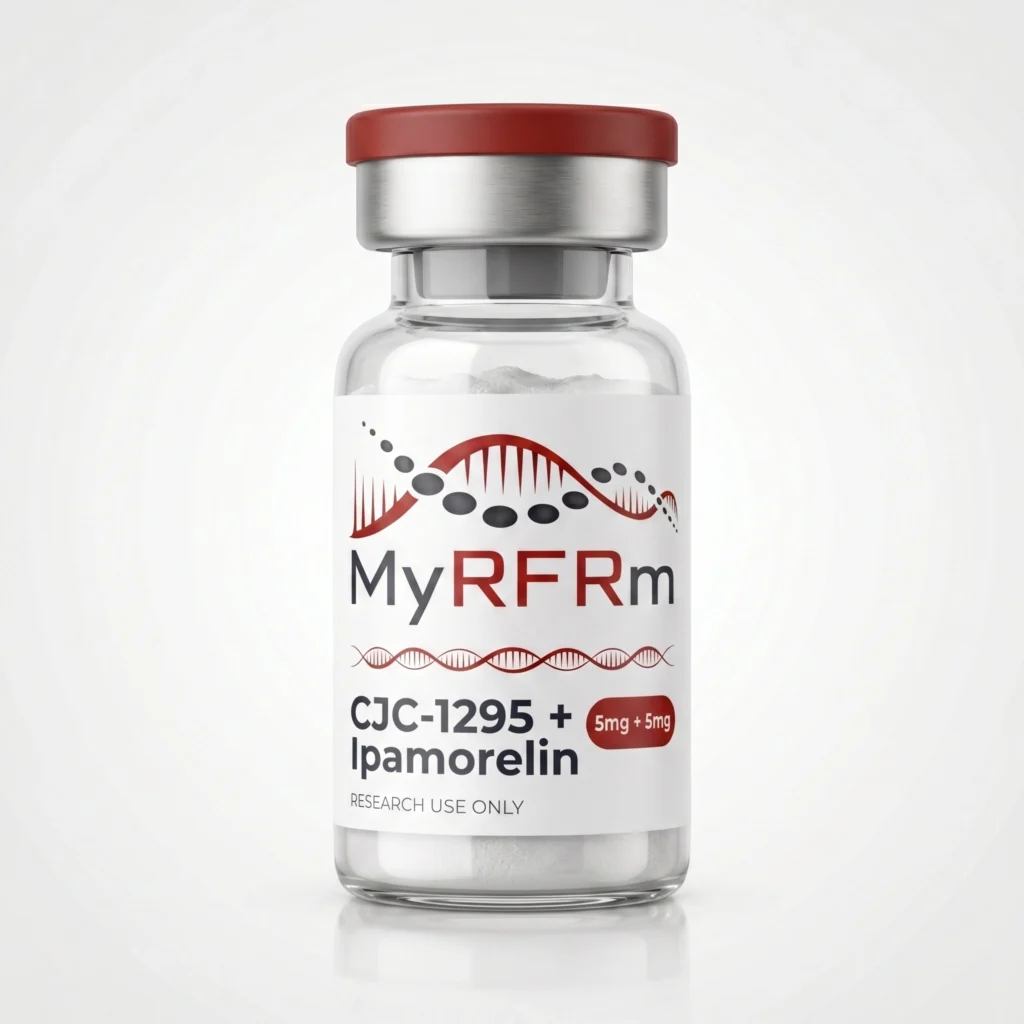
CJC-1295 + Ipamorelin — 5mg + 5mg Research Vial
$89.00
Lyophilized powder · For laboratory research use only
View Product DetailsWho Uses This Blend in Research Settings
CJC-1295 and Ipamorelin show up frequently in endocrinology and pituitary signaling research — anywhere a lab is investigating GH secretion dynamics, comparing GHRH-receptor versus ghrelin-receptor activation, or studying receptor selectivity across GH secretagogue classes.
Frequently Asked Questions
What is CJC-1295?
A synthetic GHRH analog studied for its ability to bind GHRH receptors in the pituitary and support natural GH release.
What is Ipamorelin?
A selective synthetic pentapeptide that mimics ghrelin, acting on the ghrelin receptor (GHS-R) rather than the GHRH receptor.
Why are CJC-1295 and Ipamorelin studied together?
They act on two separate pituitary receptor pathways, making the combination a useful model for studying dual-pathway GH stimulation.
Is LTF-CJ-10 approved for human use?
No. It's sold strictly for laboratory and in-vitro research, not for human consumption or therapeutic use.